Japan’s Quiet Temples and Mountain Paths
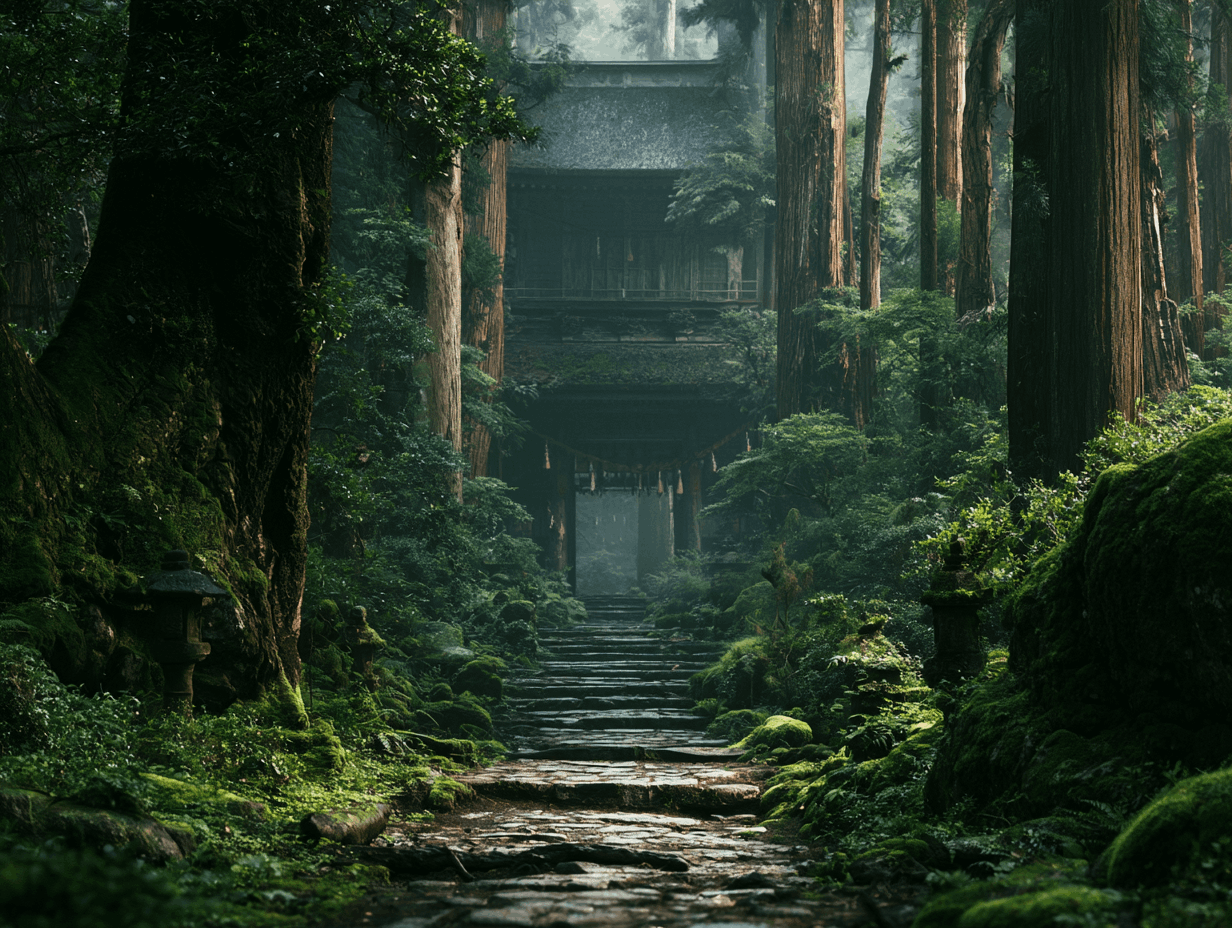
Still forests, wooden halls and moments of pure presence.
Japan still holds stretches of forest and older temple grounds where the noise drops away and the mind has room to settle. The paths stay soft underfoot, the wooden halls sit quiet under the trees, and the moments of pure presence arrive without much effort once you stop rushing.
In the mountain areas further from the main cities the trails climb gently through dense green. Tall trunks rise on both sides and the light filters down in soft patches. You walk for long stretches hearing only footsteps and the occasional bird. Some paths lead to small wooden halls that stand open or half open, the smell of old timber still present. Sitting on the steps for a while lets the usual mental chatter thin out. The air is cool and the silence feels solid. Returning to the same short routes over several days deepens the quiet rather than making it familiar in a dull way.
Further into the hills the forests grow thicker and the temples sit more remote. Stone steps worn smooth by years of use lead upward between moss and roots. The halls themselves are simple, the interiors dim and still. You can stand inside for a few minutes and notice how the body slows to match the place. Outside again the path continues under the canopy and the sense of presence stays. Evenings in nearby small towns are for simple meals and early rest. The whole rhythm encourages less talking and more simply being there.
Some of the older temple complexes on the edges of quieter regions offer the same effect without needing long climbs. Gravel paths between wooden buildings, the sound of a bell now and then, and forests that begin just beyond the last gate. The light changes slowly across the day and the atmosphere stays calm. Walking the same circuits each morning becomes a steady practice. The mind grows quieter with repetition and the moments of clear presence last longer.
These places work because they never push. The still forests provide the container, the wooden halls offer a focus, and the presence arrives once the hurry is left behind. Pack light layers, leave the schedule open, and give the paths time. A week of moving slowly between forest and hall tends to leave the inner noise softer and the sense of being present stronger than when you arrived. The best moments usually come without trying to hold onto them.